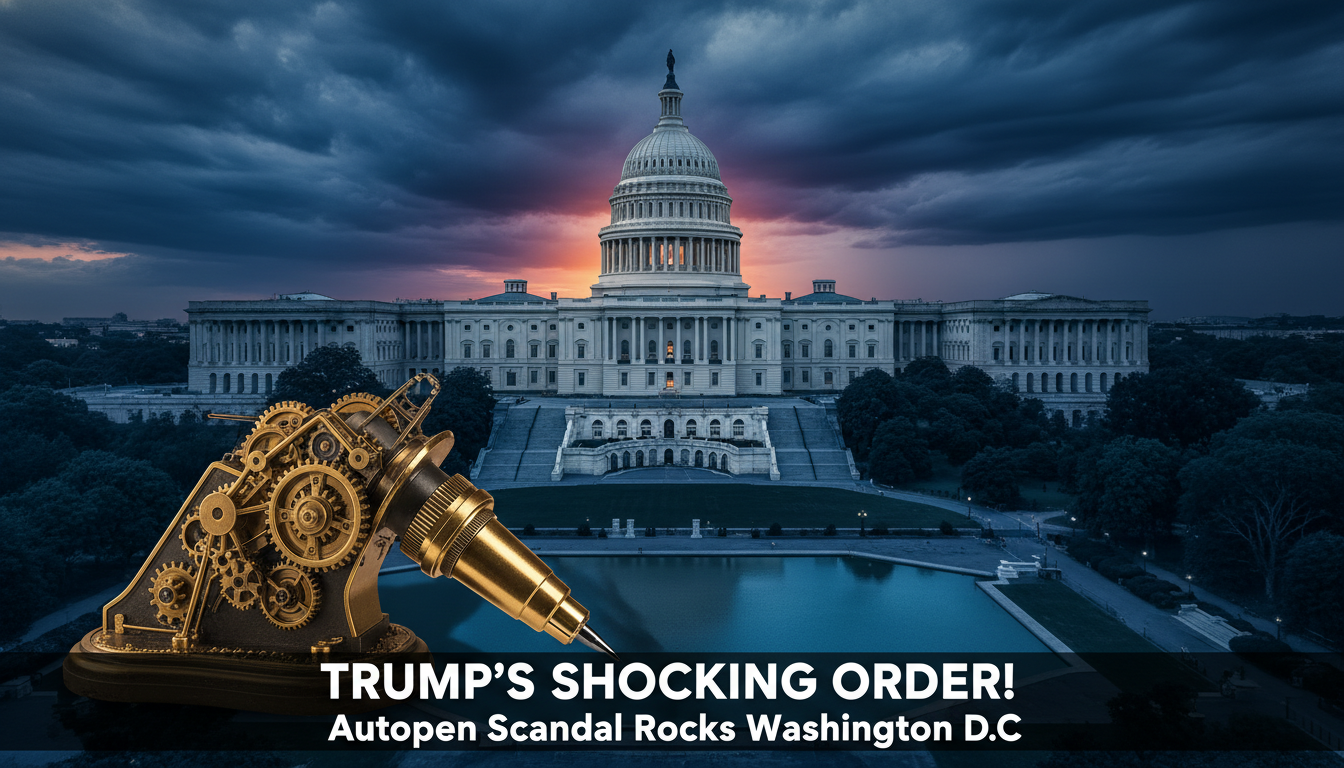
A new political storm is brewing in Washington. The **Autopen Order Controversy** has captured headlines, with former President Donald Trump launching a significant challenge to executive orders signed by President Joe Biden. This bold move raises questions about presidential power and the legitimacy of past directives. Many wonder what this could mean for future policy.
The Autopen: A History of Presidential Signatures
What exactly is an autopen? It’s a mechanical device that replicates a person’s signature. Presidents have historically used autopens to sign various documents, especially when they need to sign many papers quickly. This practice dates back decades, with multiple administrations employing the device.
However, the use of an autopen often sparks debate. Concerns arise over whether the president personally reviewed each document. Critics argue that relying heavily on an autopen could diminish the president’s direct involvement. Furthermore, transparency surrounding its use remains a common talking point.

Trump’s Bold Claims Against Biden’s Orders
President Trump recently declared he would cancel executive orders signed by President Biden using an autopen. He stated that any such document is now “terminated” and holds “no further force or effect.” Trump alleges that many of Biden’s executive orders, perhaps up to 92%, were not directly signed by Biden himself.
Consequently, Trump claims that those operating the autopen did so “illegally.” He has even suggested perjury charges for anyone asserting Biden approved the signatures. This stance has reignited long-running criticisms and speculation about the previous administration’s practices. Moreover, it casts a shadow over numerous policies enacted during Biden’s term. This develops amidst broader global tensions impacting political discourse.
Legal Ramifications and Expert Opinions
The legal implications of Trump’s declaration are uncertain. Experts have previously dismissed similar challenges as “absurd” or a “red herring.” However, the President is generally free to revoke executive orders, regardless of how they were signed.

Nevertheless, the legality concerning other documents, like bills or pardons, signed by autopen is more complex. The Justice Department has previously stated that a president can direct an official to affix a signature by autopen. This highlights a nuanced legal landscape. Understanding this complexity is vital for anyone interested in the future of politics.
Impact on Policy and Future Governance
The **Autopen Order Controversy** could significantly impact various policies. Trump’s administration has already rescinded several of Biden’s executive actions. These include policies on competition, gender ideology, and environmental initiatives.
Therefore, this challenge highlights the ongoing political divide. It also emphasizes the potential for rapid policy reversals between administrations. Furthermore, it adds another layer to the continuous debate over presidential authority and executive orders. The situation underscores how political funding influences policy outcomes in Washington.

What Happens Next?
The White House has not yet officially commented on Trump’s latest statements. However, the legal and political battles are expected to continue. This controversy serves as a stark reminder of the power dynamics at play. Ultimately, the long-term effects of this challenge remain to be seen, but it undoubtedly shapes current political discourse.